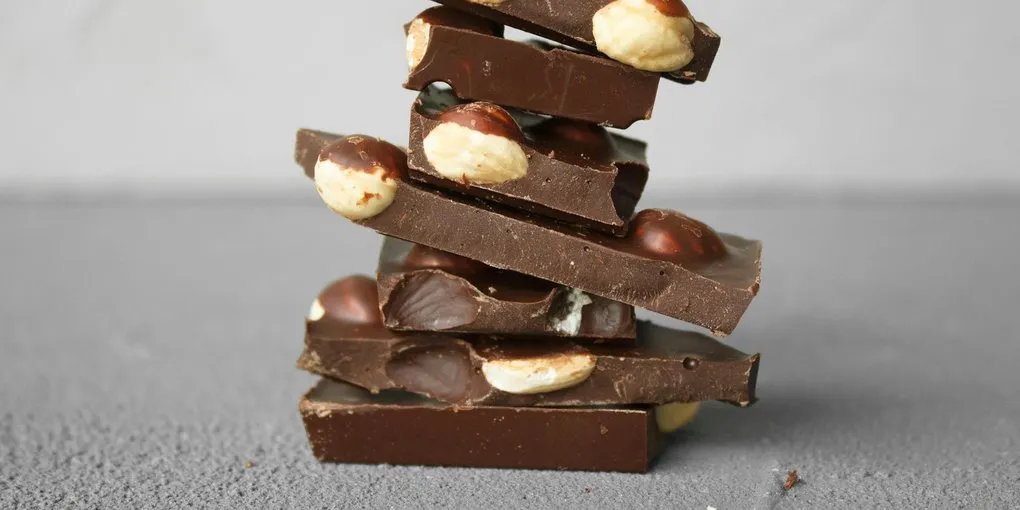
Freshly made chocolate is not at its best. This surprises most new makers, who expect the bar they just unmolded to represent the peak of their work. In reality, chocolate needs time — days at minimum, weeks ideally — for its flavors to settle, integrate, and mature. The bar you taste on day one is a rough draft. The bar you taste at week three is the finished work.
Why Fresh Chocolate Tastes Different
Several chemical and physical processes are still active in freshly tempered and molded chocolate.
Volatile stabilization. During conching, you drove off some volatile compounds (acetic acid, lighter aromatics) while retaining others. Immediately after conching, the remaining volatiles are still migrating within the chocolate matrix, redistributing between the fat phase and the solid particles. This migration takes days to reach equilibrium. Until it does, flavor perception shifts with every tasting.
Crystal maturation. Even properly tempered chocolate continues to undergo subtle crystallographic changes after molding. The Form V cocoa butter crystals that you created during tempering are stabilizing, aligning, and packing more tightly over the first 24 to 72 hours. Afoakwa’s DSC data shows the Form IV to Form V transition completing within 24 hours. This crystallographic maturation affects mouthfeel — the snap becomes crisper, the melt becomes cleaner, and the flavor release pattern changes as the crystal structure solidifies.
Flavor integration. The interaction between sugar and cocoa butter, between polyphenols and proteins, between acids and aromatics — all of these low-level chemical interactions continue at room temperature. The result is what makers describe as flavors “coming together” — rough edges smooth, disparate notes find harmony, and the overall impression becomes more coherent.
The Aging Timeline
There is no single correct aging period, but broad patterns hold across most dark chocolate.
Days 1 to 3: Crystal stabilization. The physical structure is settling. The bar may taste slightly rough, sharp, or disjointed. Do not judge your batch from a day-one tasting. If you need to evaluate, taste and note, but reserve judgment.
Days 3 to 7: Initial mellowing. The brightest, most volatile notes begin to settle. Acidity that seemed sharp on day one may already be rounding. Bitterness starts to integrate rather than dominate.
Weeks 1 to 3: The sweet spot for most dark chocolate. This is typically when craft makers report peak flavor. The bright origin character remains present but has been knit into a more cohesive whole. The finish lengthens and becomes more complex. Many makers wait at least 2 weeks before selling or sharing bars.
Weeks 3 to 8: Continued development. Some bars continue to improve throughout this period, particularly those with high polyphenol content (darker roasts, higher percentages) where the astringency needs more time to mellow. Others begin to plateau.
Beyond 2 months: Diminishing returns. For most craft dark chocolate, the flavor improvements slow dramatically after 6 to 8 weeks. The bar is not getting worse yet, but it is no longer getting meaningfully better.
Beyond 6 months: Potential degradation. At some point, aging transitions from improvement to decline. Fat bloom becomes more likely as Form V crystals slowly transition toward Form VI. Volatile aromatics continue to dissipate. The bar may taste “flat” compared to its peak. This timeline varies enormously depending on storage conditions and recipe.
Optimal Storage Conditions
Aging only works if storage conditions are controlled. Poor storage accelerates degradation rather than development.
Temperature: 15 to 18 degrees Celsius (59 to 64 degrees Fahrenheit). This is the ideal range. Below 15 degrees Celsius, the chocolate is stable but very slow to develop. Above 18 degrees, you accelerate the Form V to Form VI crystal transition that causes fat bloom. Above 25 degrees, you risk partial melting of Form V crystals.
Stability matters more than absolute temperature. A constant 17 degrees Celsius is far better than cycling between 12 and 22. Temperature fluctuation drives crystal phase transitions. Every warming-cooling cycle pushes cocoa butter molecules toward Form VI. If your storage space has significant daily temperature swings, insulate the storage container or find a more stable location.
Humidity: Below 50% relative humidity. Moisture condensation on the chocolate surface causes sugar bloom — white recrystallization of dissolved surface sugars. Good packaging helps, but the ambient environment matters too. A basement in a humid climate without dehumidification is not suitable.
Light: Dark. UV light accelerates fat oxidation. Store chocolate in opaque containers or in a dark cabinet. This is the easiest condition to control and the most commonly overlooked.
Odors: Isolated. Cocoa butter absorbs aromas from its environment. Chocolate stored near onions, garlic, cleaning products, or strong-smelling spices will absorb those odors. Use sealed containers and store away from anything aromatic.
What Changes During Aging
The changes that occur during aging are both chemical and perceptual.
Acidity decreases. Residual acetic and citric acids continue to react with other compounds, and some volatile acids slowly evaporate even through solid chocolate. Sharp, puckery acidity on day one often softens to a pleasant brightness by week two.
Bitterness integrates. Raw polyphenol bitterness does not disappear during aging, but the perception of it changes as other flavors develop around it. What felt like a bitter punch at day three may feel like a balanced backbone at day fourteen.
Deeper notes emerge. Warmer tones — caramel, tobacco, leather, dark sugar — tend to become more prominent as bright, volatile top notes mellow. This is the same pattern Dandelion describes during conching: brighter, sharper acidic notes disappear first, replaced by molasses, tobacco, and caramel tones. Aging continues this trajectory at a slower pace.
Texture refines. The mouth coating becomes more even as fat distribution within the chocolate reaches final equilibrium. The snap, if the temper was good, becomes more definitive.
Aging Different Types of Chocolate
Not all chocolate ages the same way.
Two-ingredient dark chocolate (70 to 80%): Ages the longest and benefits the most from rest. The combination of high polyphenol content and no emulsifiers means the flavor needs the most time to integrate. Two to four weeks is a solid baseline.
Dark chocolate with added cocoa butter or lecithin: The additional fat and emulsifiers create a more homogeneous matrix from the start. These bars may peak slightly earlier — one to three weeks.
Milk chocolate: Less tolerant of extended aging. The milk solids can develop stale or “off” flavors over months. Milk chocolate is best consumed within a few weeks to a few months of production.
High-percentage bars (85 to 100%): The polyphenol load is heavy and benefits from extended aging. Three to six weeks may show significant improvement. However, these bars also have less sugar to preserve them, so the window between peak and decline may be shorter.
Practical Aging Protocol
For craft makers looking to implement an aging practice:
-
Temper and mold your batch as normal. See our tempering guide for the fundamentals.
-
Unmold after full crystallization (at least 20 to 30 minutes at room temperature for standard bar molds). Properly tempered chocolate contracts from the mold and releases cleanly.
-
Wrap immediately. Foil-lined paper or food-safe packaging that provides a moisture barrier and light protection. Avoid plastic wrap directly against the surface — it can transfer flavors and trap condensation.
-
Store at 15 to 18 degrees Celsius in a dark, stable-temperature environment at below 50% relative humidity.
-
Taste on a schedule. Set aside several bars specifically for aging evaluation. Taste one at day 3, day 7, day 14, and day 28. Note the changes. This builds your understanding of how your specific recipes and origins evolve over time.
-
Determine your personal sweet spot. After repeating this process for several origins and recipes, you will develop an intuition for when your chocolate peaks. This knowledge is part of your craft.
When Not to Age
Not every situation calls for aging. If you are testing a new roast profile and need quick feedback, taste the chocolate as soon as it is tempered. The day-one tasting will not represent the final product, but it will tell you whether the roast was obviously over- or under-done.
If you are making chocolate for an event with a fixed date, plan your production timeline to allow at least two weeks of aging before the event. Making bars the day before and expecting peak flavor is a common timing mistake.
If your storage conditions are poor — no temperature control, high humidity, strong ambient odors — aging will not improve your chocolate. It will degrade it. Fix your storage before investing time in aging.
The patience that aging requires is part of the craft. A bar that sat quietly for three weeks in a cool, dark place tastes different from an identical bar eaten straight off the melanger. The chemistry is the same. The time makes it better.
For related guidance on preventing bloom during aging, see our bloom prevention guide. For the conching decisions that determine what flavors the aging process will work with, see our conching guide.
Frequently Asked Questions
- How long should I age chocolate before eating it?
- Most craft dark chocolate reaches peak flavor at 2-3 weeks of aging at 15-18C. Days 1-3 are crystal stabilization (don't judge yet). Days 3-7 show initial mellowing. Weeks 1-3 are typically the sweet spot. Improvements slow after 6-8 weeks, and beyond 6 months, degradation may begin (bloom, stale flavors, volatile loss).
- Why does fresh chocolate taste different from aged chocolate?
- Three processes are still active in freshly made chocolate: volatile compounds are redistributing between fat and solid phases, Form V cocoa butter crystals are stabilizing and packing more tightly, and low-level chemical interactions between sugar, polyphenols, proteins, and acids are ongoing. These processes take days to weeks to reach equilibrium, producing the flavor integration makers describe.
- What is the best temperature for aging chocolate?
- 15-18 degrees Celsius (59-64F). Below 15C, development is very slow. Above 18C, you accelerate the Form V to Form VI crystal transition that causes fat bloom. Above 25C, Form V crystals begin to partially melt. Temperature stability is more important than absolute temperature -- cycling between warm and cool is worse than a constant slightly-warm temperature.
- How should I store chocolate while aging?
- Wrap in foil-lined paper or food-safe moisture-barrier packaging. Store at 15-18C, below 50% relative humidity, in a dark location away from strong odors. Cocoa butter absorbs aromas from the environment, so keep chocolate away from onions, garlic, cleaning products, and spices. Avoid plastic wrap directly against the surface.
- Does milk chocolate age the same as dark chocolate?
- No. Milk chocolate is less tolerant of extended aging because milk solids can develop stale or off flavors over months. Milk chocolate is best consumed within a few weeks to a few months. Dark two-ingredient chocolate benefits the most from aging (2-4 weeks), while high-percentage bars (85-100%) may improve for 3-6 weeks but have a shorter window between peak and decline.
- Can aging fix bad chocolate?
- No. Aging can mellow sharp acidity, integrate bitterness, and develop deeper flavor notes in well-made chocolate. But it cannot fix fundamental problems -- under-fermented beans, over-roasted batches, or moisture contamination remain defective regardless of aging time. Aging improves good chocolate; it does not rescue bad chocolate.