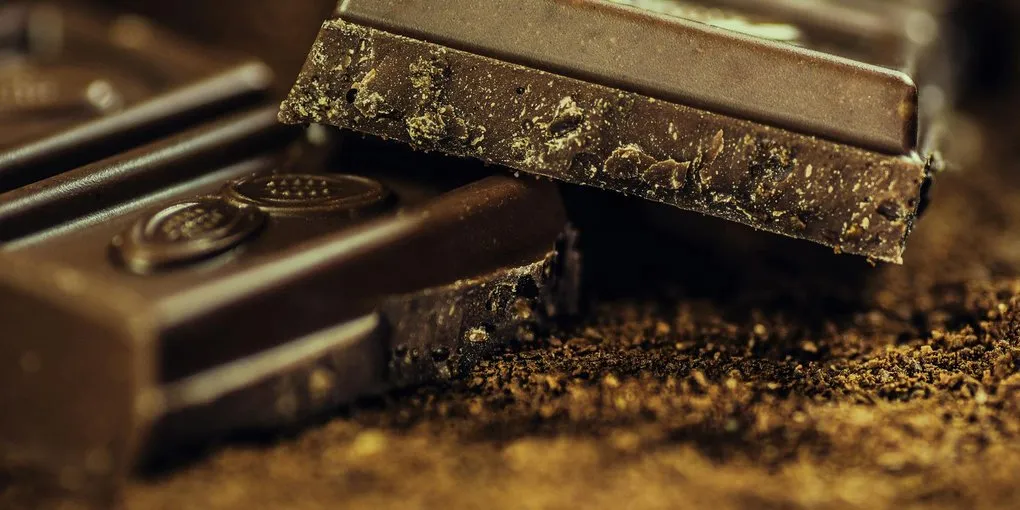
The bold number on the front of a chocolate bar — 70%, 85%, 100% — looks like a straightforward measure of intensity. Higher percentage, more cacao, more chocolate flavor. In reality, that number is one of the most misunderstood figures in food labeling. It tells you something useful, but it hides just as much as it reveals.
What the Number Actually Measures
Cacao percentage is the total weight of all cacao-derived ingredients as a proportion of the finished bar. That includes cocoa mass (also called chocolate liquor or cocoa solids), added cocoa butter, and cocoa powder if present. Everything from the cacao bean that ends up in the bar counts toward the percentage.
Here is where the first confusion enters. A 70% dark chocolate bar could be:
- 70% cocoa mass and 30% sugar (the two-ingredient American craft standard, as made by Dandelion Chocolate)
- 55% cocoa mass, 15% added cocoa butter, and 30% sugar
- 50% cocoa mass, 15% cocoa butter, 5% cocoa powder, and 30% sugar
All three bars are legitimately labeled 70% cacao. They will taste and feel dramatically different. The first has a natural fat content of roughly 34 to 41% depending on origin (calculated from 49 to 58% bean fat multiplied by the 70% cocoa fraction). The second has significantly more fat and will feel smoother and richer. The third adds non-fat cocoa solids through the powder, intensifying chocolate flavor without adding fat.
The percentage tells you how much of the bar came from a cacao tree. It does not tell you the ratio of fat to non-fat solids, which is what actually determines mouthfeel.
The Components Inside the Percentage
To understand what the number hides, you need to understand what cocoa mass is. When cacao nibs are ground, the result is cocoa mass — a thick paste that is roughly 50 to 57% fat (cocoa butter) and the rest non-fat cocoa solids (the brown, flavorful, slightly bitter stuff). The exact fat percentage depends on the origin: Tanzanian beans run 57 to 58% fat, while Ecuadorian beans average around 52%.
When a label says “70% cacao,” the remaining 30% is everything else: sugar, milk solids (in milk chocolate), lecithin, vanilla, and any other non-cacao ingredients. In craft chocolate, the remaining 30% is usually just sugar. In European-style bars, it might include added cocoa butter, soy lecithin at 0.3 to 0.5%, and vanilla.
This means two bars at the same percentage can have very different sugar levels. A 70% bar with added cocoa butter might contain only 25% sugar, with 5% of the non-cacao weight being cocoa butter that falls outside the formulation accounting. Wait — no, cocoa butter is cacao-derived and counts toward the percentage. So a 70% bar with 15% added cocoa butter contains only 30% non-cacao ingredients, all of which is sugar. But the flavor profile is completely different from a two-ingredient 70% because the extra fat smooths out the mouthfeel and suppresses the perception of bitterness and acidity.
Why 70 to 75% Is the Sweet Spot
The Flavors of Cacao database, which contains over 2,700 structured reviews, reveals a clear pattern: 70 to 75% is the sweet spot for quality scores. Bars in this range consistently outperform both lower and higher percentages.
There is a weak negative correlation between percentage and rating. As cacao percentage increases above 75%, average scores tend to decline. Bars at 80% and above score lower on average, and 100% bars almost always fail in reviews.
This is not because higher-percentage chocolate is inherently worse. It is because the balance between cacao intensity and sugar sweetness hits an optimum around 70 to 75%. Sugar is not just a sweetener — it modulates perception of bitterness, rounds out acidity, and creates flavor bridges between disparate taste components. Remove too much sugar and you expose every flaw in the bean and the process. The margin for error at 85% is much thinner than at 70%.
For craft makers, this has practical implications. If you are formulating a recipe, starting at 70% gives you the best chance of producing something excellent. Pushing to higher percentages is a legitimate creative choice, but it demands better beans, more precise roasting, and longer conching to manage the increased bitterness and astringency.
The 100% Problem
A 100% bar is nothing but ground cacao beans, possibly with added cocoa butter. There is zero sugar to soften the blow. The result exposes the full polyphenol load — the astringency, the bitterness, and whatever acidity the roast did not drive off.
The Flavors of Cacao data is unambiguous: 100% bars almost always fail in reviews. This does not mean they cannot be enjoyable — some people prefer the unsweetened intensity, and certain origins with low polyphenol content (Criollo-heavy genetics, for instance) produce tolerable 100% bars. But for the vast majority of beans and makers, the format simply does not work as a finished eating experience.
If you want to experience a bean’s character without sugar interference, a more productive approach is to taste the nibs directly or to make a very small batch at 100% for evaluation purposes only. Judge the bean, then formulate the bar at a percentage where the flavors can actually shine.
Percentage Across Chocolate Types
The percentage game changes completely when you move beyond dark chocolate.
Milk chocolate typically ranges from 30 to 50% cacao. The EU requires a minimum of 25% cocoa solids and 14% milk solids. The US requires only 10% chocolate liquor. The rest is sugar, milk solids, and cocoa butter. At these lower percentages, the milk and sugar flavors dominate, and origin character is largely obscured. A few craft makers produce higher-percentage milk bars (45 to 55%) that preserve more cacao character, but they are the exception.
White chocolate contains no non-fat cocoa solids at all. The EU requires a minimum of 20% cocoa butter and 14% milk solids. The percentage on a white chocolate bar, if stated, refers entirely to cocoa butter. Since cocoa butter carries minimal flavor (most chocolate character resides in the non-fat solids), white chocolate is fundamentally a different product — its flavor comes from milk, sugar, and vanilla rather than from cacao.
Dark milk is a recent craft innovation — dark chocolate percentages (55 to 70%) combined with milk powder additions. These bars let origin character come through while adding dairy sweetness and creaminess. The percentage still follows the standard calculation (all cacao-derived ingredients as a proportion of total weight), but the presence of milk powder changes the flavor equation entirely.
The Two-Ingredient vs Four-Ingredient Debate
The Flavors of Cacao database reveals an interesting pattern: two-ingredient bars (cacao beans and sugar only) are the American craft statement, while European makers typically favor four-ingredient bars (beans, sugar, cocoa butter, and lecithin). The database shows no systematic quality difference tied to format alone.
This matters for how you interpret percentage. Two bars, both labeled 70%, one American two-ingredient and one European four-ingredient, are equally “70% cacao” but deliver fundamentally different eating experiences. The two-ingredient version has natural fat content of 34 to 41% and tastes drier, crisper, and more angular. The European version may have 42 to 47% total fat and tastes smoother, richer, and more rounded.
Neither format is superior. But understanding the format tells you far more about what to expect than the percentage alone.
What Percentage Does Not Tell You
Origin. Two 70% bars from different origins will taste nothing alike. A Madagascar 70% with its red berry and citrus tang bears almost no resemblance to a Papua New Guinea 70% with its smoke and dark raisin character.
Bean quality. A 70% bar from well-fermented, single-origin beans and a 70% bar from commodity-grade West African beans share only a number. The cut test result — whether 75% or more of beans showed brown cross-sections indicating good fermentation — is invisible on the label.
Process. How the beans were roasted (light vs. dark, fast vs. slow), how long they were refined (8 hours vs. 30 hours), and how they were conched all affect flavor profoundly. None of this is captured in the percentage.
Fat distribution. As discussed above, a 70% bar can range from about 34% total fat (two-ingredient with low-fat beans) to 45% or more (with generous cocoa butter addition). This changes the entire eating experience.
Reading the Label Smarter
The percentage is a starting point, not a destination. Here is how to extract more information from a bar label:
Check the ingredient list. In most countries, ingredients are listed in descending order by weight. “Cocoa beans, sugar” means two-ingredient. “Cocoa mass, sugar, cocoa butter, soy lecithin, vanilla” means European-style. The order tells you which cacao components are dominant.
Look for origin information. Single-origin bars from named farms or cooperatives almost always indicate a maker who cares about traceability and quality. “Cacao” with no further information is a signal to be skeptical.
Compare within a maker’s range. Most craft makers offer the same origin at different percentages. Tasting a maker’s 70% and 85% from the same origin teaches you what percentage does to flavor perception better than any explanation.
Ignore percentage as a proxy for intensity. A well-made 65% with fruity, complex beans can taste more “intense” than a dull, flat 85% from commodity beans. Intensity is about flavor quality, not quantity.
For a deeper dive into what every element of a bar label means, see our guide to reading craft chocolate labels. To understand how to taste chocolate systematically, percentage becomes one variable among many in a richer evaluation framework.
Frequently Asked Questions
- What does the cacao percentage on a chocolate bar mean?
- Cacao percentage is the total weight of all cacao-derived ingredients (cocoa mass, added cocoa butter, cocoa powder) as a proportion of the finished bar. A 70% bar means 70% of its weight comes from cacao and 30% from non-cacao ingredients (usually sugar). The number does not distinguish between fat (cocoa butter) and non-fat cocoa solids, so two bars at the same percentage can have very different mouthfeel and flavor.
- Why is 70% considered the sweet spot for dark chocolate?
- Data from the Flavors of Cacao database (2,700+ reviews) shows that 70-75% bars consistently score highest. Sugar at the 30% level modulates bitterness, rounds acidity, and creates flavor bridges between taste components. Above 75%, scores decline on average. The margin for error at higher percentages is thinner -- every flaw in the bean and process is exposed when there is less sugar to buffer.
- Why do 100% chocolate bars almost always get poor reviews?
- Without any sugar, 100% bars expose the full polyphenol load -- all the astringency, bitterness, and residual acidity. The Flavors of Cacao database shows that 100% bars almost always fail in reviews. Some low-polyphenol origins (Criollo genetics) produce tolerable 100% bars, but for most beans, the format does not work as a finished eating experience.
- Can two 70% bars have different amounts of fat?
- Yes, significantly. A two-ingredient 70% bar (nibs + sugar) has a natural fat content of roughly 34-41% depending on the origin's bean fat percentage (49-58%). A three-ingredient 70% bar with added cocoa butter could have 45% or more total fat. Both are legitimately labeled 70% cacao, but the mouthfeel is dramatically different.
- What is the difference between cocoa mass, cocoa butter, and cocoa solids?
- Cocoa mass (also called chocolate liquor) is ground cacao nibs -- it is roughly 50-57% fat and the rest non-fat solids. Cocoa butter is the fat component of the bean, extracted by pressing. Cocoa solids (or cocoa powder) are the non-fat component left after pressing. All three count toward the cacao percentage on a label.
- Does higher cacao percentage mean more intense chocolate flavor?
- Not necessarily. A well-made 65% bar with fruity, complex beans can taste more 'intense' than a flat 85% from commodity beans. Higher percentage means more cacao by weight, but flavor intensity depends on bean quality, origin genetics, fermentation, roast profile, and conching -- none of which are captured by the percentage number.