For most home chocolate makers, a hairdryer and two bowls is the right starting point for winnowing. It costs nothing if you already have a hairdryer, and it works. The practical upgrade path is a DIY PVC pipe winnower with a Dayton 1TDP3 blower, which handles higher volumes with consistent airflow. For production scale, the Aether Deluxe Cracker at approximately $1,800 is the standard commercial entry point. There is no single “best” winnower — the right choice depends entirely on your batch size.
What Winnowing Does and Why the FDA Limit Matters
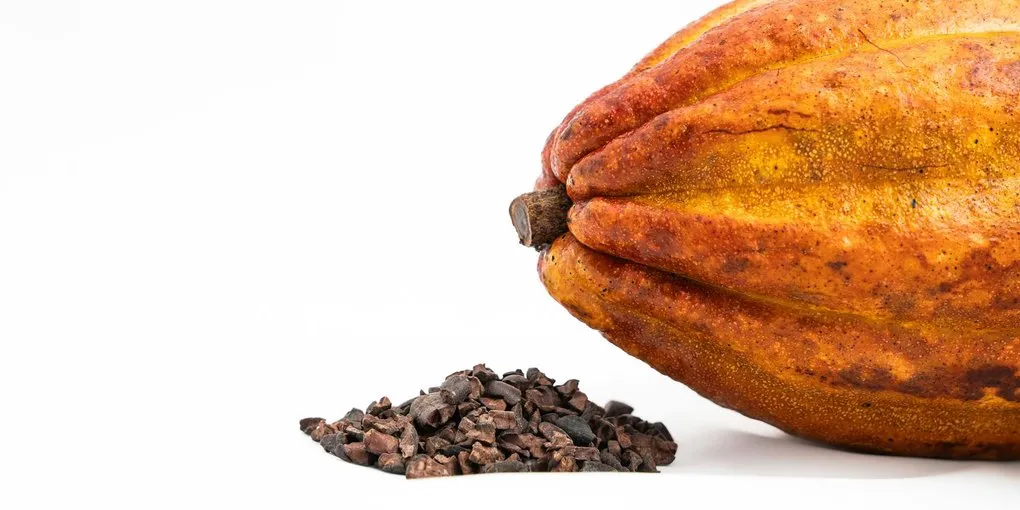
Winnowing is the separation of the husk (the outer shell of the cacao bean) from the nib (the meat of the seed) after roasting and cracking. The husk has no flavor value in chocolate and, at high concentrations, creates off-flavors and texture problems. The FDA sets a hard limit: no more than 1.75% husk by weight in finished nibs or chocolate products.
Blind tasting data from Chocolate Alchemy establishes the sensory thresholds. At 0 to 2% husk, husk is completely indistinguishable from clean nibs. At 5%, it is marginal but not notably bad. At 10% and above, obvious defects appear. At 15% and above, significant quality degradation occurs. For home use, hitting below 5% is an achievable and adequate target. For commercial products, staying under the FDA 1.75% limit is mandatory.
The shell accounts for approximately 10 to 15% of the bean by weight, while the nib is 85 to 90%. After cracking and winnowing, expect to lose about 25% of your starting bean weight to husk removal.
Method 1: Hair Dryer and Bowls
The simplest winnowing method requires only a hairdryer and two large bowls. Hold one bowl high above the second bowl. Pour cracked bean pieces slowly from the upper bowl to the lower bowl while directing the hairdryer stream horizontally across the falling material. Husk, being lighter, is blown aside while heavier nibs fall into the lower bowl.
This method works but has practical limits. The airflow from a hairdryer is inconsistent — variable speed controls make the stream unpredictable, and the close proximity of heat makes temperature management an issue. More practically, hairdryer winnowing is slow and physically tiring for anything more than a pound or two.
Dandelion Chocolate’s “Ten-Minute Rule” is the relevant guideline: never spend more than 10 minutes winnowing by hand. Beyond that point, you are getting diminishing returns on husk removal while fatiguing yourself. Set a time limit, accept the result, and move on.
Do this outside or over a large tarp. Cacao husk is lightweight and gets into everything.
Method 2: Fan Winnowing
A standing fan aimed horizontally across a work surface is a significant upgrade over a hairdryer. The fan provides more consistent airflow, can be positioned at a fixed angle, and handles larger volumes without heat concerns. Pour cracked nibs slowly through the air stream, adjusting your pour height and rate to match the separation you observe.
This is the method most home makers settle on as a permanent solution for batches up to a few pounds. The main disadvantage is that it still requires continuous manual work and is not easily scaled.
Method 3: DIY PVC Pipe Winnower
The standard DIY winnower design uses 2-foot food-safe PVC pipe paired with a Dayton 1TDP3 blower and a cyclone separator. The blower creates a consistent air column inside the vertical PVC pipe. Cracked nibs are dropped in from the top; husk is carried upward by the airflow into a collection bag or cyclone separator, while heavier nibs fall through to the bottom collection bin.
This design is in Dandelion’s equipment references as the DIY escalation from hand winnowing. The advantage of the vertical air column is consistency — once you calibrate the blower speed for your bean size (different origins crack to different average nib sizes), the separation is highly repeatable.
Cost for the DIY version is typically $50 to $100 in materials. It handles approximately 1 lb per minute of throughput with proper setup.
See our detailed DIY winnower plans article for complete construction specifications.
Method 4: Crankandstein Cocoa Mill
The Crankandstein cocoa mill is a dedicated grain mill adapted for cacao cracking. It runs at approximately 0.5 lb per minute and costs around $200. The plastic gears are a noted weakness — they eventually break under heavy use — but for occasional home use the machine handles cracking adequately.
The Crankandstein cracks but does not separate husk from nib; you still need a separate winnowing step. It is primarily a cracking upgrade from the Champion juicer method for makers who want more control over crack consistency without the pre-refining complication.
Method 5: Champion Juicer (Crack + Pre-Refine Combined)
The Champion juicer handles approximately 1 lb per minute for cracking and serves double duty as a pre-refining step. The Champion is the best available option for combined cracking and pre-refining — both Dandelion Chocolate and Nanci cite it as their primary recommendation for this stage.
Running nibs through the Champion produces a chunky cocoa paste that goes into the melanger already partially broken down. This significantly reduces the load on the melanger’s granite rollers and shortens total refining time. The caveat is that you need a separate winnowing step before the Champion pass — you want clean nibs, not husk-contaminated material, going through the pre-refiner.
See our dedicated Champion juicer article for full details on this dual-use approach.
Method 6: Aether Deluxe Cracker
The Aether Deluxe Cracker is a stainless steel commercial cracker that handles approximately 1.5 oz per minute — which sounds slow but is consistent and separates husk cleanly in one pass. At approximately $1,800, Nanci calculates it becomes cost-effective after approximately 20,000 lbs of production.
For most home makers, 20,000 lbs is a lifetime of production. This machine is for small commercial operations where batch consistency and reduced labor justify the cost.
Choosing the Right Winnower for Your Scale
A useful heuristic: if you are making fewer than 5 lbs per week, the hair dryer or fan method with Dandelion’s Ten-Minute Rule is adequate. At 5 to 20 lbs per week, the DIY PVC winnower or Champion juicer plus fan is the right setup. Above 20 lbs per week, you need either a dedicated cracker or a production setup.
The Champion juicer occupies a unique position in this range because it combines cracking and pre-refining, effectively doing two steps at once. For makers who are also concerned about melanger load and refining time, the Champion’s pre-refining function may be more valuable than its cracking efficiency.
The Husk Problem in Context
Poor winnowing is one of the most common quality issues in craft chocolate. Husk contributes a papery, slightly bitter note that masks origin flavors. For high-quality single-origin bars where you are paying a premium for the bean’s flavor profile, inadequate winnowing is money wasted.
Take the time to winnow properly. For your first batches, taste the difference: make a small test batch with your normal winnowing and another with an extra pass through the winnower to push husk below 2%. The difference in flavor clarity is often significant.
For the full bean-to-bar process context, see our guide to cracking and winnowing cacao and our complete equipment guide for beginners.
Frequently Asked Questions
- What is the FDA limit for husk in chocolate?
- The FDA sets a limit of 1.75% husk by weight in finished nibs or chocolate. Blind tasting data shows husk is completely indistinguishable at 0–2%, marginal at 5%, and produces obvious defects at 10% and above. For commercial products, staying under 1.75% is a legal requirement, not just a quality goal.
- How does a DIY PVC winnower work?
- A DIY PVC pipe winnower uses a 2-foot food-safe PVC tube with a Dayton 1TDP3 blower creating a consistent vertical air column. Cracked nibs dropped in from the top are separated by weight — lighter husk gets carried upward by the airflow into a collector, while heavier nibs fall through to a bottom bin. Throughput is approximately 1 lb per minute once calibrated.
- Is the Champion juicer good for winnowing cacao?
- The Champion juicer is not a winnower — it is a cracker and pre-refiner. It breaks roasted beans into pieces and partially refines them into a cocoa paste at about 1 lb per minute. You still need a separate winnowing step (fan or PVC pipe) before running material through the Champion. Its combined cracking and pre-refining function reduces melanger load significantly.
- How much weight do I lose during winnowing?
- Expect to lose approximately 25% of your starting roasted bean weight to husk removal. The shell is 10–15% of the raw bean by weight, but with moisture loss from roasting and cracking losses, the practical winnowing loss is around 25% from roasted bean to clean nib.
- Can I winnow without any special equipment?
- Yes. A hairdryer and two bowls is the simplest approach — pour cracked nibs slowly from one bowl to another while directing the hairdryer stream across the falling material. Dandelion's Ten-Minute Rule applies: never spend more than 10 minutes hand winnowing per batch. A standing fan aimed horizontally is a more consistent upgrade at no additional cost.
- At what production volume should I upgrade from hand winnowing?
- Hand winnowing (hair dryer or fan) is practical for batches under about 5 lbs per week. At 5–20 lbs per week, a DIY PVC winnower or the Champion juicer pre-refining combination is the right step up. Above 20 lbs per week, a dedicated cracker like the Aether Deluxe or a full winnowing setup becomes economically justified.