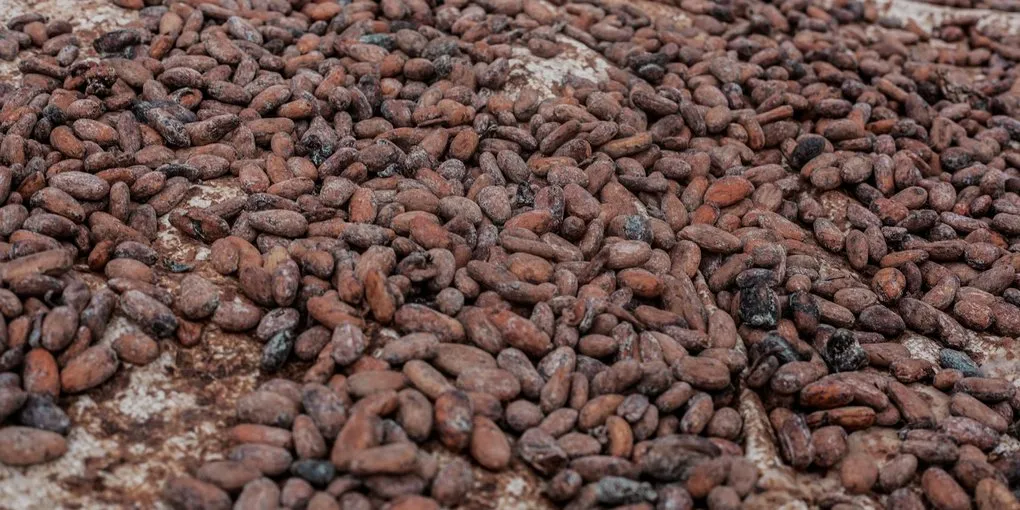
The Behmor 2000AB is the standard recommendation for home cocoa bean roasting. It holds 2 to 2.5 lbs of beans per batch, costs approximately $300 to $400, and is consistently cited by both Chocolate Alchemy and Dandelion Chocolate as the right tool for serious home use. If you cannot get a Behmor, a home oven at 325°F preheated with beans spread on sheet trays will produce adequate results — though John Nanci explicitly describes oven roasting as unreliable compared to the drum roaster.
Why Roasting Matters for Flavor
Roasting is where most of the recognizable chocolate flavor is built. The fermentation process creates flavor precursors — free amino acids from protein hydrolysis and reducing sugars from polyphenol oxidation. Roasting transforms those precursors through Maillard reactions and Strecker degradation into the pyrazines, aldehydes, furans, and other volatile compounds that constitute chocolate flavor.
The Maillard reaction initiates at around 100°C and accelerates rapidly above 140°C. The key Strecker aldehydes produced during roasting include 3-methylbutanal from leucine (the strongest predictor of cocoa-chocolate character, with an R-squared value of 0.843 in Afoakwa’s analysis), 2-methylbutanal from isoleucine, and phenylacetaldehyde from phenylalanine, which gives flowery and honey notes.
A lighter roast preserves more acidic and fruity character. A darker roast builds more Maillard complexity and bitterness while reducing fruit notes. Roasting is not just heat application — it is flavor calibration.
The Three Phases of a Cacao Roast
Nanci’s three-phase system provides the most precise framework for craft cacao roasting:
Phase 1 — Drying: From ambient temperature up to 212°F bean temperature. This phase should take 8 to 20 minutes. Virtually no flavor chemistry is happening; this is moisture removal. The key instruction is not to rush this phase — “don’t burn or bake” is the guiding principle.
Phase 2 — Development: From 212°F to 232°F bean temperature. This should take 2.5 to 5 minutes. Flavor precursors are being built. A faster ramp (2.5 to 3.5 minutes) emphasizes fruit and chocolate character. A slower ramp (5 or more minutes) reduces acidity and astringency.
Phase 3 — Finishing: From 232°F to the end of roast, at a rate of 5 to 6°F per minute. End-of-roast temperature range is 245 to 270°F bean temperature. The primary sensory cue is aroma — an acrid or harsh smell means stop immediately.
Nanci uses a profile notation to record roasts: “10/8/6 @ 256°F” means Phase 1 took 10 minutes, Phase 2 took 8 minutes, Phase 3 took 6 minutes, and the end of roast temperature was 256°F. This shorthand makes it easy to replicate and compare profiles across batches and origins.
The specific Behmor target is 254 to 262°F end-of-roast temperature using the P1 profile only.
The Behmor 2000AB in Detail
The Behmor 2000AB is a drum roaster that borrowed its design from the home coffee roasting market. Beans rotate in a perforated drum inside a closed chamber, which keeps chaff contained and allows relatively even heat distribution. The 2 to 2.5 lb capacity is practical for serious home use — large enough to produce meaningful quantities, small enough to test individual origins.
Behmor 2000AB Plus Coffee Roaster
For cacao, the Behmor runs on P1 (its default profile) only. The other profiles are designed for coffee and introduce temperature patterns that do not translate to cacao roasting. The machine does not have bean-temperature probes — you are working from environmental temperature readings and time, plus your aroma perception for the finish cue. This is where Nanci’s three-phase system and the acrid-smell cutoff become essential.
See our dedicated Behmor 2000AB roasting guide for full step-by-step setup and profiling instructions.
Why Not Just Use a Home Oven?
Home ovens can roast cacao. Dandelion Chocolate’s basic method is to preheat to 325°F and roast 1 kg of beans spread on sheet trays for approximately 30 minutes. The beans should be single-layer and stirred periodically.
The problems with oven roasting are real but manageable:
Uneven heat distribution is worse in an oven than in a drum roaster. Beans at the edge of the tray receive different heat than beans in the center. You can mitigate this by stirring frequently, but you cannot eliminate it.
Temperature control is imprecise. Home oven thermostats are calibrated for large-batch stability — they cycle on and off, and the actual temperature can vary by 25°F or more from the set point. This makes hitting the specific Phase 2 and 3 ramp rates essentially impossible with oven roasting.
Chaff dispersal is significant. Cacao chaff is lightweight and will scatter throughout your oven and potentially into the heating elements. Expect cleanup.
Despite these limitations, oven roasting works for occasional use or when you cannot justify the cost of a drum roaster. The flavor difference is real but may not matter for your first several batches while you are learning the rest of the process.
The Dandelion Search Space Method
Once you have your Behmor (or oven) set up, the question becomes how to find the optimal roast for each origin. Dandelion Chocolate uses a systematic approach: roast three 1-kg batches of the same beans using three profiles — stopping at first pop (the first audible cracking of beans), 2 minutes less than that point, and 2 minutes more. Make chocolate from each batch using identical post-roast processing. Conduct a blind taste test on a -2 to +2 scale.
Narrow the range based on the results and run additional batches within the preferred range. Typical development of a roast profile requires 9 to 16 test batches per origin. This process is time-intensive but produces an objectively optimized roast for that specific bean lot.
The implication is that roast profiles are not transferable between origins without retesting. Madagascar beans need a different profile than Peruvian beans. Even the same origin from different harvest years may need adjustment.
Post-Roast: The Six-Hour Wait
One detail that trips up new makers: you should wait at least 6 hours after roasting before cracking beans, with overnight being preferable. Beans fresh from the roaster are too brittle and their shells too tightly bonded to crack cleanly. After resting, the beans firm up to an optimal cracking consistency.
This wait is also where some of the volatile acid continues to evolve — the roasted bean is not finished transforming even after the roaster stops. Rushing to crack immediately costs you some of this post-roast development.
Connecting Roasting to the Full Process
Roasting is the second major flavor event in chocolate making after fermentation. The precursors built during fermentation — the free amino acids and reducing sugars — are the raw material the Maillard reaction works with during roasting. If your beans were poorly fermented, no roast profile will build good chocolate flavor from them.
This is why the order of troubleshooting matters. If finished chocolate tastes flat or astringent, check fermentation quality first (a cut test of the beans should show at least 75% brown cross-sections). Then look at roast. Then at conching and tempering. Flavor problems almost always trace back to either fermentation or roasting.
For the complete bean-to-bar picture, see our step-by-step beginners guide and our detailed guide to roasting cacao beans at home.
What to Look for in Any Roasting Equipment
Temperature measurement capability: You need either a bean probe or a reliable way to correlate chamber temperature to bean temperature. The Behmor does not have a bean probe; experienced users develop correlation charts from calibration batches.
Batch size consistency: A machine that performs differently at 1 lb versus 2 lb capacity makes profile development difficult. The Behmor is most consistent at 1.5 to 2 lbs.
Chaff management: Cacao produces significant chaff. A drum with a chaff collector (as the Behmor has) is far easier to work with than open trays.
Cooling capacity: Beans need to cool quickly after reaching end-of-roast temperature to avoid over-roasting in retained heat. The Behmor has a cooling cycle; oven roasting requires dumping beans onto a room-temperature surface and spreading them quickly.
Summary
The Behmor 2000AB is the right roaster for home use. Learn Nanci’s three-phase system, record your profiles consistently, and plan 9 to 16 test batches to dial in any new origin. If the Behmor is not available, oven roasting at 325°F for approximately 30 minutes is workable but less consistent.
Frequently Asked Questions
- What is the best home cocoa bean roaster?
- The Behmor 2000AB is the standard recommendation for home cocoa bean roasting. It holds 2–2.5 lbs per batch, costs approximately $300–$400, and runs on the P1 profile for cacao. Both Chocolate Alchemy and Dandelion Chocolate cite it as the right tool for serious home use.
- Can I roast cacao beans in a regular oven?
- Yes, but results are less consistent than a drum roaster. Dandelion Chocolate's method is to preheat to 325°F and roast 1 kg of beans on sheet trays for approximately 30 minutes. Problems include uneven heat distribution, imprecise temperature control, and chaff dispersal. Nanci at Chocolate Alchemy explicitly describes oven roasting as unreliable compared to drum roasting.
- What temperature should cacao beans be roasted to?
- Using Nanci's three-phase system, the end-of-roast bean temperature should fall between 245°F and 270°F. The Behmor 2000AB target is specifically 254–262°F. The acrid smell from the roaster is the primary cue to stop, regardless of the temperature reading.
- How long does it take to roast cacao beans?
- A full roast profile takes approximately 20–35 minutes total across three phases. Phase 1 (drying to 212°F) takes 8–20 minutes. Phase 2 (development from 212°F to 232°F) takes 2.5–5 minutes. Phase 3 (finishing to 245–270°F) takes 3–6 minutes at 5–6°F per minute.
- Why should I wait before cracking roasted beans?
- Beans should rest at least 6 hours after roasting, with overnight preferred. Fresh-roasted beans are too brittle and their shells too tightly bonded for clean cracking. Resting allows the beans to stabilize to a consistent cracking texture and allows further post-roast flavor development in the retained volatiles.
- How do I develop a roast profile for a new cacao origin?
- Dandelion Chocolate's search space method: roast three batches of the same beans at first pop, 2 minutes short of first pop, and 2 minutes past first pop. Make chocolate from each and blind taste test on a -2 to +2 scale. Narrow the range and repeat. Expect 9–16 total test batches to find an optimized profile for a new origin.