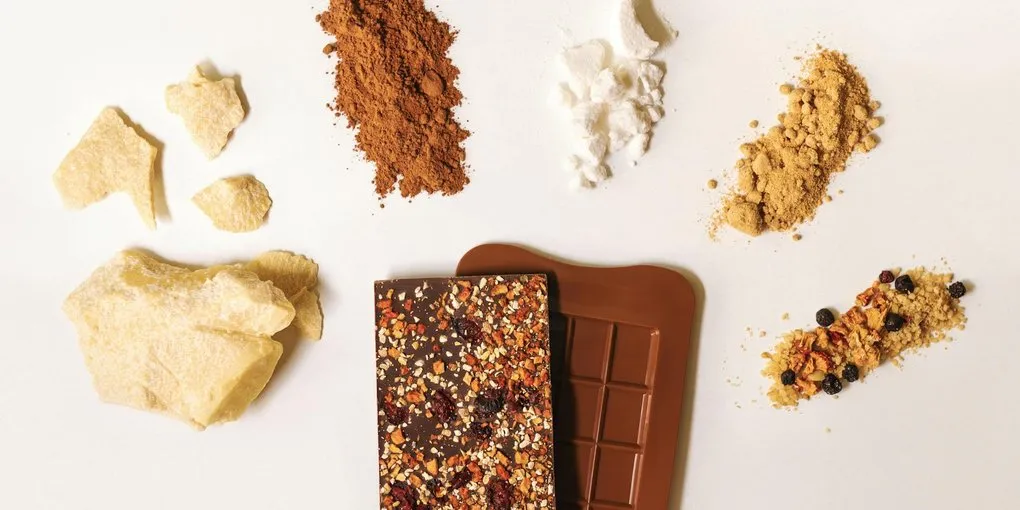
Add cocoa butter when your chocolate is too thick to work with at tempering temperature, or when you want a smoother, richer mouthfeel than the natural nib fat content provides. Dandelion Chocolate’s recommendation is approximately 5g of cocoa butter per kg of chocolate mass for meaningful viscosity reduction. Add it at the beginning of the melanger run. At this quantity, it changes the texture and mouthfeel perceptibly but does not dominate the flavor.
Why Cocoa Butter Reduces Viscosity
Chocolate is a suspension of solid particles (cocoa and sugar) in liquid fat (cocoa butter). Viscosity — resistance to flow — depends primarily on the ratio of solid particles to liquid fat. More fat relative to particles means less friction between particles, which means lower viscosity and easier flow.
When you add cocoa butter, you are increasing the fat fraction of the suspension without adding more particles. The existing particles now have more fat to lubricate their movement relative to each other. The result is a more fluid mass at the same particle size.
The cocoa beans used in bean-to-bar chocolate already contain 50 to 57% fat depending on origin. Tanzanian and Trinidadian beans are at the high end (57 to 58%); Ecuadorian beans are at the lower end (approximately 52%). This natural variation means that two-ingredient chocolate made from different origins will have different natural viscosities even at the same percentage — high-fat origins flow more easily than low-fat ones.
When Viscosity Becomes a Problem
Two-ingredient chocolate without added fat is naturally more viscous than European-style chocolate with added cocoa butter. The natural fat content of a 70% two-ingredient bar (from 50 to 57% bean fat × 70% cocoa fraction) works out to approximately 34 to 41% total fat. European-style bars often target 34 to 38% total fat through deliberate addition, but with more precise distribution.
If your chocolate is too thick to:
- Pour smoothly into molds without leaving gaps
- Coat inclusions evenly
- Work comfortably for dipping bonbon centers
- Flow under polycarbonate mold tabs without air pockets
…then adding cocoa butter solves all of these problems.
How Much to Add
Dandelion Chocolate’s starting point: approximately 5g cocoa butter per kg of chocolate mass. This is 0.5% by weight — a very small amount. At this quantity, the viscosity reduction is noticeable and the effect on flavor is minimal.
For more significant viscosity reduction, you can increase to 1 to 2% (10 to 20g per kg). Beyond about 2%, you begin to noticeably change the fat-to-particle ratio in a way that affects mouthfeel as well as flow — the chocolate feels richer and heavier.
For making enrobing or dipping chocolate (where very fluid flow is needed), cocoa butter additions up to 5% are common. At this level, the chocolate flows easily but has a noticeable richness and may set softer than a lower-fat bar.
Compare the efficiency of cocoa butter to lecithin: lecithin takes approximately 10× less by weight than cocoa butter to achieve the same viscosity reduction. If viscosity is the only goal, a trace of lecithin (0.01 to 0.05%) is more efficient. Cocoa butter is preferable when you also want the texture change — the richer mouthfeel that comes with higher total fat.
When to Add It in the Process
Add cocoa butter at the beginning of the melanger run, with or just before the nibs. Adding cocoa butter early ensures it becomes fully integrated into the mass as refining progresses. It also provides immediate lubrication that helps the melanger establish flow faster in the early stages.
If you add cocoa butter later in the run (after the mass is already refined), you will see a sudden drop in viscosity as the additional fat disperses. This can be used intentionally to adjust the final consistency of the chocolate before tempering, but the integration is less thorough than early addition.
Adding cocoa butter at the tempering stage (after the melanger run) is possible but requires additional stirring to ensure full integration. Poorly integrated cocoa butter creates fat pockets that can cause uneven crystallization.
Effect on Percentage
Added cocoa butter counts toward the cocoa percentage, because it is a cocoa-derived ingredient. This changes your sugar calculation.
Original two-ingredient calculation at 70%: 650g nibs: Sugar = (650/0.70) - 650 = 279g sugar. Total bar = 929g.
With 5g cocoa butter added per original kg formula: Total cocoa = 650g nibs + 5g cocoa butter = 655g. Sugar at 70% = (655/0.70) - 655 = 280g sugar. Total bar = 935g.
At 5g/kg addition, the effect on the percentage calculation is minimal. At larger additions, recalculate accordingly.
The Effect on Tempering
Higher fat content from added cocoa butter does not change the fundamental tempering protocol — the Form V crystal formation temperatures remain the same. What it does change is working time: higher-fat chocolate stays in the working range longer before cooling out of temper. This gives you more time to work with the chocolate after tempering, which is a practical advantage for complex work like dipping.
Higher-fat chocolate also tends to shrink more upon setting, which improves mold release. Well-tempered high-fat chocolate falls cleanly from polycarbonate molds.
Natural Cocoa Butter vs. Deodorized
Craft chocolate makers have a choice between natural cocoa butter (which retains some chocolate character and aroma) and deodorized cocoa butter (which has been processed to remove most flavor and aroma).
Natural cocoa butter contributes cocoa notes to the finished chocolate, which is consistent with the flavor transparency goals of bean-to-bar making. Deodorized cocoa butter is flavor-neutral — it adds fat without any flavor contribution. Industrial formulations often use deodorized to avoid the variability of natural cocoa butter flavor.
For bean-to-bar work where you want origin flavor front and center, natural cocoa butter is the appropriate choice.
For the complete formulation picture, see our chocolate recipe formulation guide. For the science of how cocoa butter affects viscosity, read our chocolate viscosity troubleshooting guide. For understanding cocoa butter at the molecular level, see our cocoa butter chemistry guide.
Frequently Asked Questions
- Why would I add cocoa butter to bean-to-bar chocolate?
- Two-ingredient bean-to-bar chocolate is naturally more viscous than European-style chocolate with added fat, because the total fat content depends entirely on the beans (which run 50–57% fat). Adding cocoa butter increases total fat, reduces viscosity, and creates a richer, smoother mouthfeel. It is particularly useful when the chocolate is too thick to pour into molds cleanly or to use for dipping.
- How much cocoa butter should I add to chocolate?
- Dandelion Chocolate's starting point is approximately 5g of cocoa butter per kg of chocolate mass (0.5% by weight). This produces noticeable viscosity reduction with minimal flavor change. For more significant viscosity reduction, 10–20g per kg (1–2%) is common. For enrobing or dipping applications, up to 5% is used. Add at the beginning of the melanger run for full integration.
- Does added cocoa butter count toward the chocolate percentage?
- Yes. Added cocoa butter is a cocoa-derived ingredient and counts toward the cocoa percentage. This changes the sugar calculation. With 655g total cocoa (650g nibs + 5g butter) at 70%, sugar = (655/0.70) - 655 = 280g. At small additions (5g/kg), the percentage impact is minimal but should be accounted for in precise formulations.
- Is cocoa butter more or less effective than lecithin for reducing viscosity?
- Lecithin is far more efficient by weight — it takes approximately 10× less lecithin than cocoa butter to achieve the same viscosity reduction. However, cocoa butter also changes the physical texture and mouthfeel (richer, smoother) in addition to reducing flow resistance. Use cocoa butter when you want both effects; use lecithin when viscosity reduction alone is the goal.
- When in the process should I add cocoa butter?
- Add cocoa butter at the beginning of the melanger run, with or just before the nibs. Early addition allows the cocoa butter to integrate fully into the mass during refining. Adding it late in the run or at the tempering stage requires additional stirring for integration and may produce less even fat distribution. Early addition is strongly preferred.
- What is the difference between natural and deodorized cocoa butter?
- Natural cocoa butter retains cocoa aroma and flavor from the beans. Deodorized cocoa butter has been processed to remove most flavor and aroma, making it essentially neutral. For bean-to-bar chocolate where origin flavor transparency is the goal, natural cocoa butter is appropriate. Industrial formulations use deodorized to avoid flavor variability between batches.