
Equipment
Champion Juicer for Chocolate Making: Cracking and Pre-Refining
The Champion juicer cracks cacao beans and pre-refines nibs into cocoa paste at about 1 lb/min. Learn how it fits into the bean-to-bar process and when to use it.
The Champion juicer cracks cacao beans and pre-refines nibs into cocoa paste at about 1 lb/min. Learn how it fits into the bean-to-bar process and when to use it.
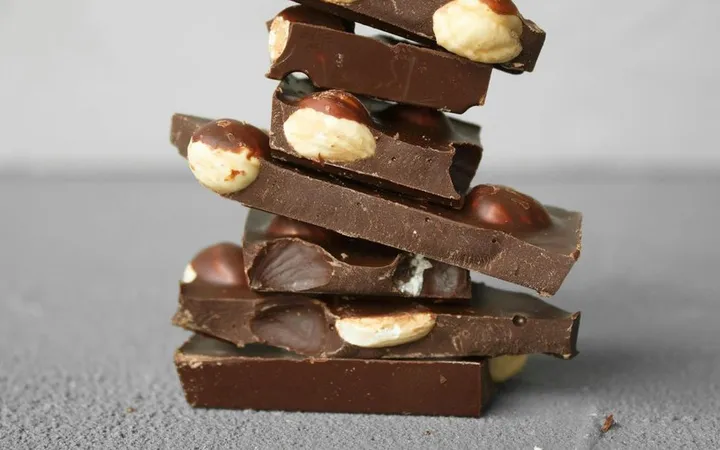
Why freshly tempered chocolate doesn't taste its best, how flavor evolves over days and weeks of aging, optimal storage conditions, and when aging crosses into degradation.
The volatile compounds that create chocolate flavor — pyrazines, Strecker aldehydes, furans, linalool, and more. How fermentation creates precursors and roasting assembles them into the 68 compounds identified by GC-MS.
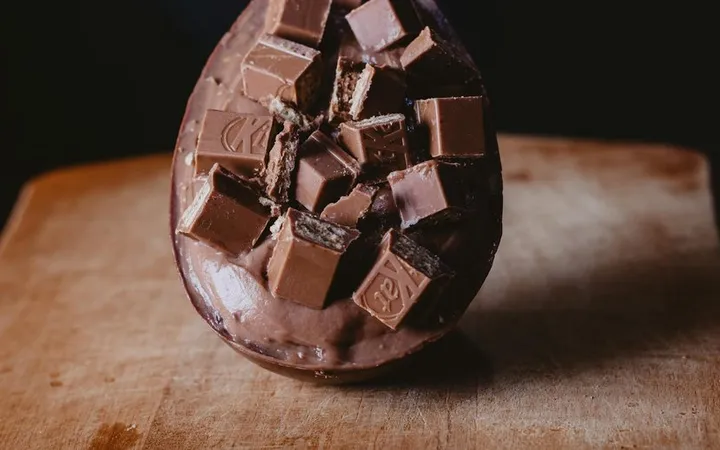
A comprehensive walkthrough of the IICCT and Cacao of Excellence chocolate flavor frameworks. Learn to identify and name the flavors in craft chocolate, from dairy and fruit to defects like chemical and medicinal off-notes.
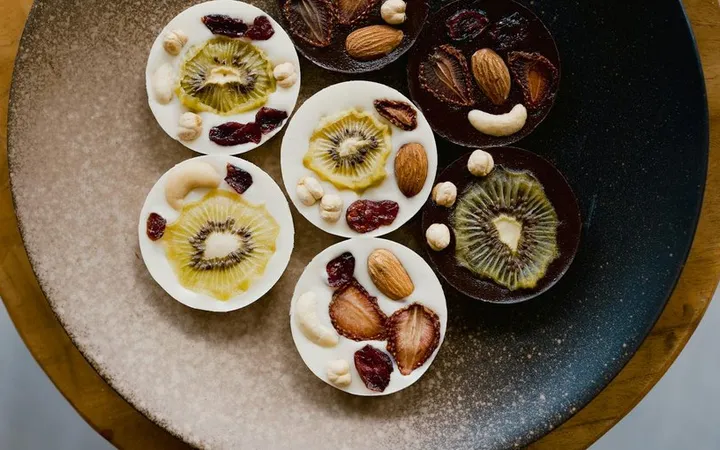
How to add inclusions to bean-to-bar chocolate — nuts, cacao nibs, dried fruit, salt, spices, and more. Covers timing, tempering considerations, and fat migration prevention.
Everything you need to make bean-to-bar chocolate at home. Covers roasting, cracking, winnowing, refining, tempering, and molding with specific tool recommendations.
Polycarbonate vs silicone molds, proper filling technique, cooling rates, contraction mechanics, common defects, and tips for molding inclusions and bonbons.
A systematic troubleshooting guide for every common off-flavor in bean-to-bar chocolate. Root cause, fix, and prevention for vinegary, smoky, hammy, metallic, and chemical notes.
Learn to formulate chocolate recipes from cacao percentage to ingredient ratios. Covers the two-ingredient base formula, cocoa butter additions, milk, and lecithin.
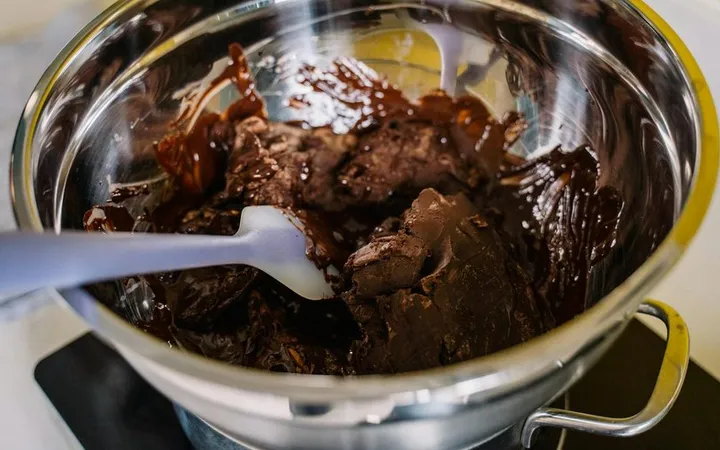
Why your chocolate is too thick to work with, what the Casson model means in plain English, and the precise fixes — cocoa butter, lecithin, PGPR, and pre-refining sugar — that actually solve viscosity problems.

Fix tempering problems with this systematic guide. Covers broken temper, soft set, bloom, over-seeding, and why room temperature and water both destroy temper.
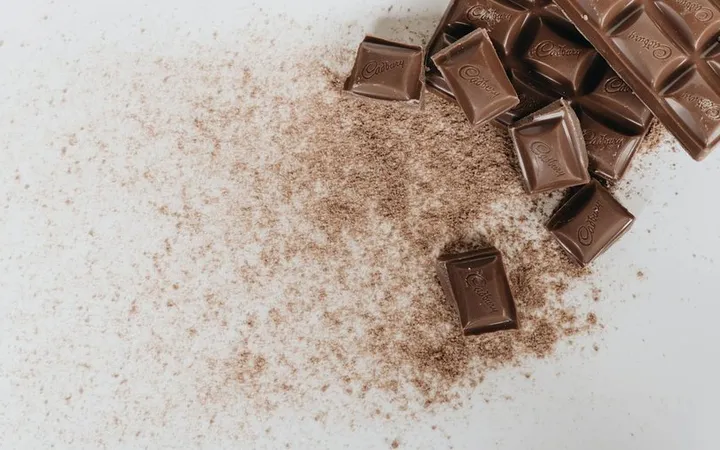
The six crystal forms of cocoa butter, triglyceride composition (POS/SOS/POP), fatty acid profile, why Form V is the target, the bloom transition to Form VI, and how cocoa butter alternatives work.

Conching develops chocolate flavor by oxidizing volatile acids, shaping particles, and distributing fat. Learn how long to conch and what the three industrial phases do.
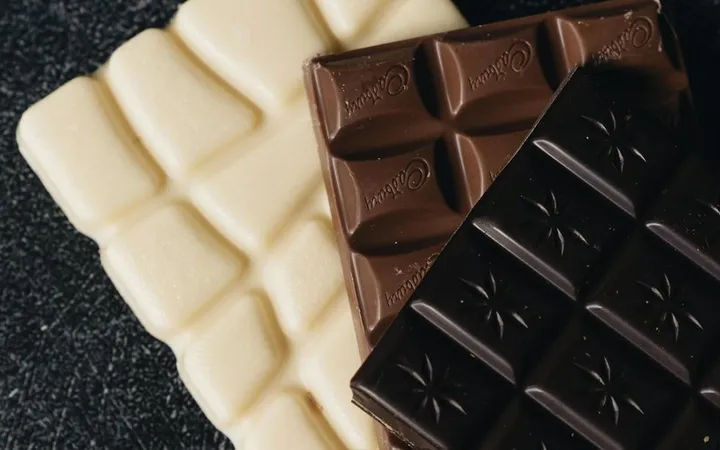
Five complete bean-to-bar dark chocolate formulations with exact weights, fat targets, and conching adjustments. From the minimal two-ingredient approach to a European-style bar with lecithin and a spiced variation.
Build a PVC pipe winnower for cacao using a Dayton 1TDP3 blower and cyclone separator. Full materials list, assembly, and calibration instructions.